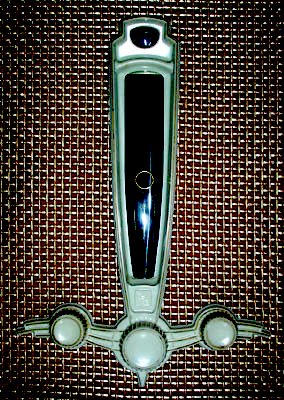
behold, the almighty Thor


My adventurous projects in the world of audio-electronics.
warning : I'm a musician, NOT an electrician. What I do to my own equipment, is not necessary correct! I enjoy doing DIY stuff, and thought it was cool to put up a kind of studio tech-diary, a modding-log
Thank you for looking, and I hope you enjoy what you find here!
best, Kaada


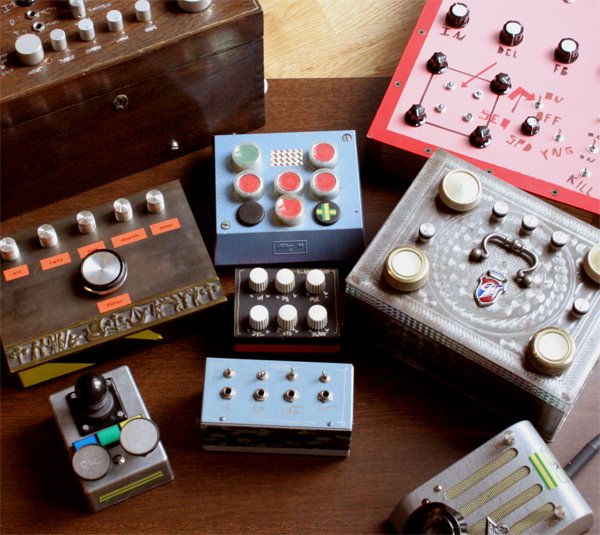
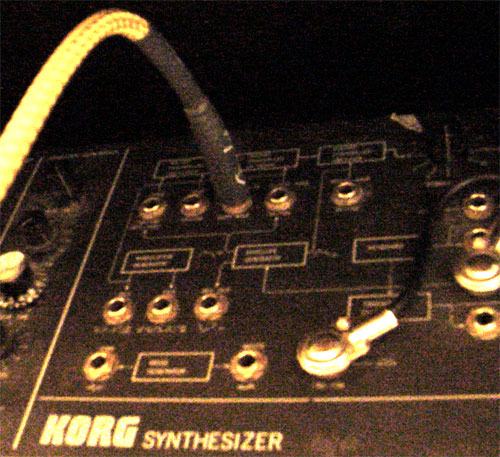
got the case and the pcbs from some crazy circuit-bending kids on ebay a few years ago. And it's been with me on every concert ever since. Done quite a bit of soldering work on it. Had to stabilize the circuit and make it more predictable.
Labels: fx


My adventures in the exiting world of audio-electronics continues with an upbrush in my AMS rmx16 - the all time favorite reverb, ever!... Its an evergoing project to keep this thing alive, and every year another component goes down. The chips are a nightmare to swap. And sone of them are almost impossible to find. Thanks to David Kulka for all the good tips 
I've searched and looked for the schematics for the AMS rmx16 for two years now. It seems like it was never released. So I just had to jump in, and see what could be done with my limited knowledge. After cleaning the unit for old stuff and sticky glue (thanks to degreaser)

- Got the new fan, buttons and ribbons from www.studioelectronics.biz. .... Wonder how long it will last before it goes down.... again

Labels: fx
If you have any electronics ability, modifying your own gear can be a very satisfying experience.
You don't need to be an expert to crack open your equipment and start making changes. You basically need the ability to solder and desolder neatly, and you should be comfortable reading schematics. With very little electronics experience, I've been able to modify several pieces of equipment.
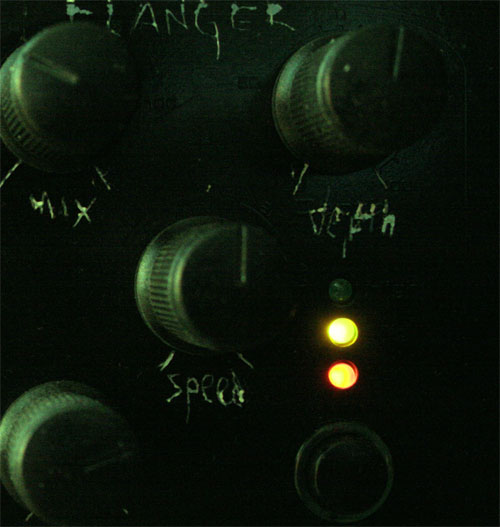
G-SPOT SPRING FLANGER- cheap - flangers have a tendency to lay itself on top of the sounds, instead of blending in they often sound superficial. I have installed a small spring-reverb into my Flanger. I grabbed the springs form two mini guitaramps and stringed them inside. It makes my job more exiting to create alterations of everyday instruments. Is there anything more joyful than a huge, massively over-engineered effects pedal covered in LEDs, tiny switches and retro synth knobs? There are many reasons people choose to modify commercial musical gear. Upgrading internal components like capacitors and op-amps can clean up the overall sound. Likewise, providing a cleaner power supply can reduce hum and increase headroom, and help add fullness to the low end. Adding extra controls and patch points to an analog synthesizer can yield a much more expressive instrument, and allow you to interconnect it with your other gear.
Here's a picture of the inside of my RA-500. Notice the speaker glued on the metalbox in the middle. I did the filmmusic to a 70'ties inspired spagetthiwestern film once, and I ended up placing sending deep sounds through the metal into the stereo springs. It was so cool, that I installed it permanently with a jack-input for the speaker on the front.
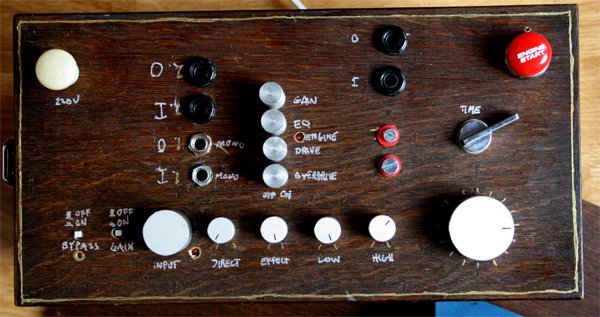
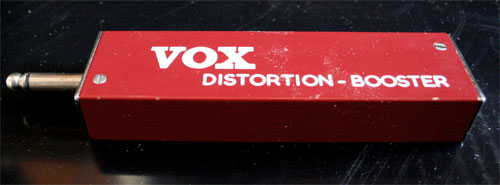
I like to record guitars and stuff with as little distortion as possible. It reduces the possibility to play around with the sound later on. To get the distortionchains to blend in with the music, I always record them through a speaker. Often with distant mics. Here is a pic of one of my smaller distortionunits. I've heard that it is rare, but I don't know much about it. It gives a light distortionsound, and I used it in a buschain or two. Does anybody know anything about it?
Labels: fx
run the bus/sounds sound through a tape-delay, but turn the delay to zero. Record it again. The idea is not to get a delay sound, but to let the tape work on your track.Labels: fx
To get an old-organic sound , I often find myself running tracks out and through a speaker. (re-amping)
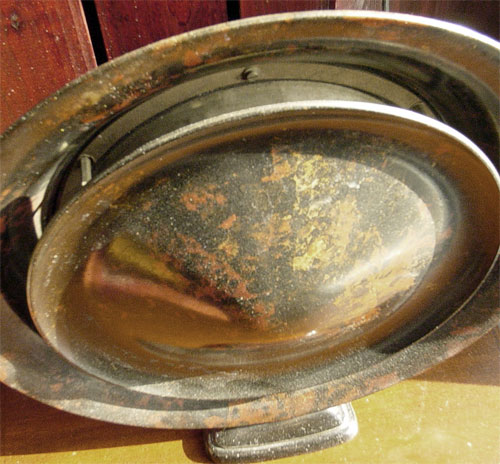
Like this old philips speaker can driven and recorded to a separate track - to inject some distorted high-end
Everything sounds better with a small touch of distortion.